About friends of earth-
Friends of the Earth England, Wales and Northern Ireland is a grassroots environmental campaigning community. From our campaigners and lawyers to local groups and supporters, we push for change on causes that matter to you:
- Protecting your home and local environment.
- Adopting alternative energy solutions.
- Fighting for environmental and social justice globally.
What’s wrong with our food?
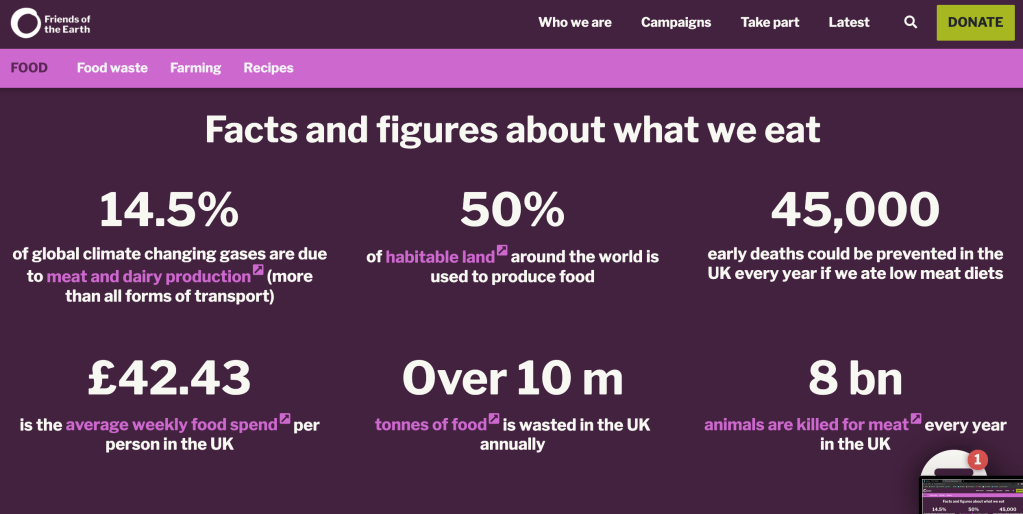
1. Meat and dairy production takes up a whopping three quarters of all the available agricultural land in the world
One third of that land is used to grow animal feed such as soy — that’s an awful lot of land being used to inefficiently feed animals rather than directly feed people. And meat consumption is predicted to go up. The world is expected to be eating 76% more meat globally by 2050 than it did in 2005.
2. Producing livestock for human consumption contributes 14.5% of annual global greenhouse gas (GHG) emissions
So if we’re going to tackle climate change, we need to reduce the amount of meat and dairy we eat.
3. If all of us in the UK switched to the World Health Organisation’s healthy daily diet , we’d save 15 gigatonnes of GHG emissions by 2050
That’s around a third of the entirety of global GHGs emitted in 2011. Tackling climate change is also incredibly important for making sure the world is able to produce enough food – this is known as global food security. Extreme weather caused by climate change, rising sea levels, desertification and increased pressure from pests and disease, all threaten our ability to feed ourselves.
4. It’s not just meat and dairy that’s the problem
Our taste for fish has been stripping the seas. More than 70% of the world’s fish stocks are over- or fully exploited. Fish like tuna are disappearing from oceans – a tragedy not only for marine life but for the millions of people who rely on small-scale fishing for food and jobs.
Change what you buy and eat
We’ve all got to eat less, and better, meat and dairy
You don’t have to entirely drop meat and dairy from the shopping list for a planet-friendly diet. Start by reducing the amount you eat, making sure that what you’re eating is the best quality you can afford. Replace meat with plant proteins like beans, nuts and pulses, or meaty mushrooms.
Free-range is an animal welfare label for chicken and eggs, recognised in law
It means chickens have spent at least part of their lives outside. Free-range chicken typically contains less fat than intensively reared chicken, as well as being tastier.
MSC certified applies to seafood from sustainable sources
It is certified by the Marine Stewardship Council. It means producers don’t overfish and do look after the marine environment.
RSPCA-assured labels guarantee higher animal welfare standards
Certification applies to animals raised to welfare standards approved by the RSPCA.
Fair trade labels can be found on anything from bananas and chocolate to t-shirts and gold
Fair trade sets minimum ethical standards. It means farmers are paid a fair price for their goods, which are made under decent working conditions.
Effect farming has on our environment
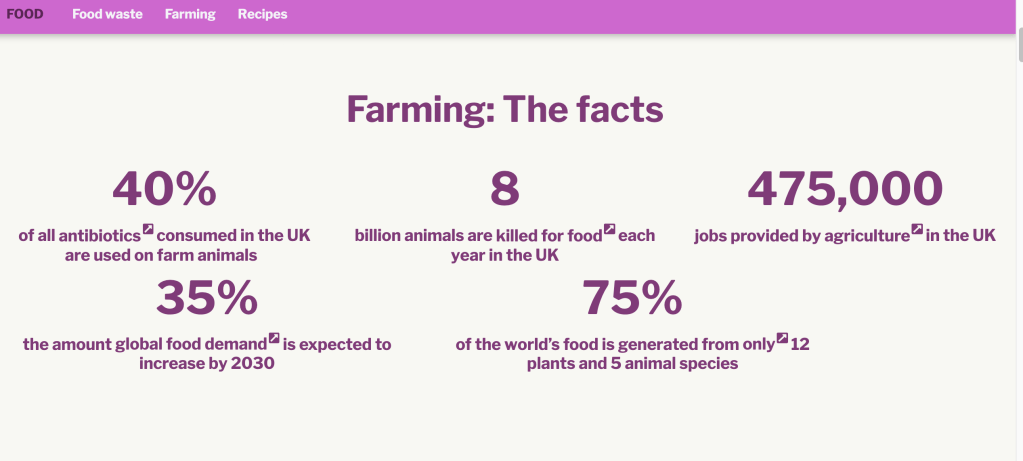
Intensive farming is linked to loss of wildlife, soil and water pollution, and poor animal welfare.
Some people say it’s the only way to feed a growing world population at a time when climate change, soil degradation and water shortages are threatening food production.
But we don’t need factory farms, loads of chemicals or genetically modified seeds to feed a growing population.
We need to improve the ways we produce food – and learn from farmers in the UK and abroad who are cutting their emissions, restoring their soils and protecting their local ecosystems. We also need to eat more plants, less and better meat (and dairy), and waste less food. Our food and farming system needs a healthy environment, and must play its part in building one.
What’s the problem with pesticides and fertilisers?
Some farmers use pesticides to try and keep insects and other bugs away from their crops. But pesticides harm our wildlife and environment , and add toxins into the food chain.
Some pesticides harm bees – and we rely on bees to pollinate our food. Pesticides can also affect the health of farm workers – causing severe and sometimes fatal illness.
Farmers often also use fertilisers to add nutrients to their soils and help crops grow faster. But too much synthetic fertiliser can lead to pollution of local streams and rivers with nitrogen, killing fish and plant life.
We know that there are some great farmers out there. They’re maintaining healthy soils that don’t need fertilisers, and managing bugs and diseases the natural way. That’s great news for their health, our tastebuds and the environment.
Genetically modified food – what’s wrong with it?
Genetically modified (GM) foods are produced by changing the genetic make-up of crops and other plants to alter their characteristics.
Despite promises of miracle crops, GM technology has failed to increase food yields and it’s made the problems caused by intensive farming worse. They benefit big farmers and biotech corporations – not us.
We think it would be a mistake to grow GM crops commercially in the UK. We need a farming approach that works with nature, not against it. GM crops are not needed for future food production [PDF].
People have a right to eat GM-free food, but a loophole in our labelling laws means that milk, meat and eggs from GM-fed animals are not labelled .
Animal welfare
Just like humans, animals need access to food and water, good quality housing and safe living conditions, free from fear or pain. They should be able to go outside, move around freely and eat a natural diet.
Many farmers understand that providing these conditions benefits the animals and is better for the environment .
The UK has laws to protect farm animals, but they aren’t perfect. Many intensive farms still keep animals in conditions that encourage disease and discomfort .
New trade agreements could see our supermarkets selling more low-welfare products unless we protect food standards after Brexit.
Make sure all your meat is RSPCA Assured – and buy organic when you can – to support farmers who treat their animals well.
Is there a problem with factory farms?
Factory farming involves raising animals in large numbers (and at high density) in a factory-like environment. It’s also called ‘intensive farming’.
The aim of factory farming is to produce as much meat, eggs or dairy at the lowest possible cost.
It needs high volumes of cheap animal feed – which has been linked to deforestation around the world. And all that livestock means lots of waste, which can pollute local soils and water, damaging biodiversity and killing fish. Some 30% of thenitrogen that pollutes water in the EU [PDF] comes from livestock.
Intensive farms also rely on antibiotics and pesticides to prevent disease in crowded conditions. This means intensive farms don’t offer a healthy environment for the animals living there.
And factory farming isn’t just bad for the environment and animal welfare. It’s bad for our health. Studies have shown that intensively produced meat contains less vitamins and more unhealthy fats [PDF] than pasture fed, extensively raised animals. Plus, people living near factory farms have reported health problems linked to the huge amounts of manure the farms produce, which is often spread on nearby fields.
Animals and antibiotics – is there a risk?
30% of all antibioticsconsumed in the UK are used on farm animals. And most of the time, these animals aren’t even ill. Sounds like a waste, doesn’t it?
It gets worse. Using antibiotics at low doses before the animal even becomes ill is causing big problems. Resistant strains of bacteria are evolving, leading to some antibiotics becoming less effective. That means that giving antibiotics to pigs, cows, sheep and chickens is making it harder to treat humans for serious diseases.
And why give antibiotics to so many animals? Intensive farms rely on antibiotics to prevent their animals getting ill in cramped, low-welfare conditions. If using antibiotics like this were banned, farms would need to treat their animals better and give them more room.
We think sick animals should be treated with the right drugs to make them better. But healthy animals shouldn’t.
Choose organic meat to be sure you’re not supporting inappropriate antibiotic use – and help save these important treatments for the people who need them.
 FREYA GEORGE LAUVC602